Affiliate Disclosure: This article contains Amazon affiliate links (tag: seperts-20). If you click a link and make a qualifying purchase, HomeVibed may earn a small commission at no extra cost to you. Our editorial opinions are independent of affiliate compensation. Full disclosure →
How to Style Open Shelving Without It Looking Cluttered: A 2024 Step-by-Step Guide
This article contains Amazon affiliate links. If you purchase through them, HomeVibed earns a small commission at no extra cost to you.
How to Style Open Shelving Without It Looking Cluttered: A 2024 Step-by-Step Guide
Styling open shelving is the art of curating visible storage to enhance a room's aesthetic while maintaining functionality and avoiding visual chaos. It matters for homeowners because it transforms ordinary storage into a dynamic display, adding personality, depth, and a sense of curated living to kitchens, living rooms, bathrooms, and home offices, making your space feel both organized and inviting.
Table of Contents
- Understanding the Appeal and Pitfalls of Open Shelving
- The Foundation: Preparing Your Shelves for Success
- The Golden Rules of Open Shelf Styling
- Step-by-Step Styling Method: The "Layered Narrative" Approach
- Styling Open Shelving in Specific Rooms
- Maintaining Your Styled Shelves: The Art of Evolution
- Frequently Asked Questions
- Conclusion
Understanding the Appeal and Pitfalls of Open Shelving
Open shelving has become a design staple in modern homes, gracing everything from minimalist kitchens to bohemian living rooms. Its allure lies in its ability to make spaces feel larger, more airy, and deeply personal. Unlike closed cabinets, open shelves invite interaction, showcasing your treasured possessions, functional items, and decorative accents in a way that tells a story about you and your home. They break up visual monotony, add architectural interest, and can even serve as a focal point in a room. For homeowners looking to infuse personality and warmth into their living spaces, open shelving offers an unparalleled opportunity for creative expression.
However, the very transparency that makes open shelving so appealing is also its greatest challenge. Without a thoughtful approach, these beautiful display opportunities can quickly devolve into visual clutter, making a room feel messy, disorganized, and overwhelming. The line between curated display and chaotic collection is surprisingly thin. Many homeowners struggle with how to strike this balance, leading to shelves that either feel too sparse and impersonal or too crowded and stressful. The key to successful open shelf styling lies in understanding both its potential and its common pitfalls, and then employing strategies to maximize the former while avoiding the latter.
The Allure of Visible Storage
The appeal of open shelving goes beyond mere aesthetics; it taps into our desire for authenticity and connection. In an era where homes are increasingly designed for functionality, open shelves remind us that our living spaces are also for living, for collecting memories, and for expressing who we are. They allow for a dynamic display that can be easily updated with seasons, moods, or new acquisitions, keeping your home feeling fresh and alive. Imagine a kitchen with open shelves displaying beautiful ceramic bowls, a collection of cookbooks, and a few potted herbs – it instantly feels more inviting and lived-in than a wall of uniform closed cabinets. This visible storage encourages a more mindful approach to what we own, prompting us to select items that are not only useful but also aesthetically pleasing.
Common Mistakes That Lead to Clutter
The path to cluttered open shelves is often paved with good intentions. One of the most common mistakes is treating open shelves like traditional storage cabinets, where anything and everything gets tucked away. This leads to an overload of items, many of which are purely functional and not visually appealing. Another pitfall is a lack of curation; simply placing items without considering their relationship to each other, their color, size, or texture. This can result in a jumbled, chaotic look that detracts from the room's overall design.
Ignoring the "negative space" is another frequent error. Every item doesn't need to be a showstopper, and empty space is just as important as the objects themselves. Without breathing room, shelves feel heavy and overwhelming. Lastly, failing to consider the room's overall aesthetic can lead to mismatched items that clash with the existing decor, creating visual dissonance rather than harmony. Understanding these common missteps is the first step toward mastering the art of open shelf styling and ensuring your shelves enhance, rather than detract from, your home's beauty.
Why a Thoughtful Approach is Essential
A thoughtful approach to styling open shelving isn't just about making things look pretty; it's about creating a cohesive narrative within your home. It's about intentionality – choosing each item for its beauty, its story, or its function, and then arranging it in a way that highlights its best qualities. This deliberate process transforms shelves from mere storage units into curated vignettes, adding depth, character, and a sense of order to your space. When done well, open shelving can elevate a room from ordinary to extraordinary, reflecting your personal style and making your home feel uniquely yours. It's an opportunity to showcase your personality, hobbies, and travels, turning your home into a living gallery that evolves with you.
The Foundation: Preparing Your Shelves for Success
Before you even think about placing a single item, successful open shelf styling begins with a solid foundation. This involves more than just cleaning the shelves; it's about assessing the structural integrity, considering the backdrop, and understanding the role the shelves play within the room's overall design. Skipping these preparatory steps is like trying to build a house on sand – the results will be unstable and ultimately unsatisfying. A well-prepared shelf provides a neutral, appealing canvas that allows your curated items to truly shine, preventing them from looking like an afterthought or a random collection.
Assessing Shelf Material and Condition
The material and condition of your open shelves significantly impact their aesthetic and how they should be styled. Are they rustic wood, sleek metal, minimalist glass, or classic painted MDF? Each material brings its own character and influences the types of items that will look best. For instance, a dark, reclaimed wood shelf might lend itself to more earthy tones and vintage finds, while a crisp white shelf could be the perfect backdrop for vibrant modern art or minimalist ceramics. Inspect your shelves for any signs of wear, chips, or instability. Ensure they are securely mounted and can bear the weight of the items you intend to display. If they're showing their age, a fresh coat of paint, a good sanding, or even a simple cleaning can make a world of difference. For wooden shelves, consider a natural wood conditioner to bring out their warmth. For metal, ensure there are no rust spots. A clean, well-maintained shelf surface is crucial for a polished look.
Considering the Backdrop: Wall Color and Texture
The wall behind your open shelves is just as important as the shelves themselves. It acts as the backdrop for your display, and its color and texture can either enhance or detract from your styling efforts. A contrasting wall color can make your shelves pop, while a monochromatic scheme can create a seamless, sophisticated look. For example, if your shelves are white, a deep navy or charcoal gray wall will make them stand out dramatically. Conversely, if your shelves are a rich wood tone, a warm off-white or light gray wall can create a soft, inviting feel. Don't forget about texture; a shiplap wall, exposed brick, or even a subtle wallpaper pattern can add depth and interest, making your shelf display feel more integrated into the room. Ensure the wall is clean and free of marks. Sometimes, a fresh coat of paint on the wall behind the shelves is all it takes to elevate the entire display.
🏠 Recommended Product: Greenstell Floating Shelves These rustic yet modern floating shelves offer a sturdy and stylish base for your open shelving display, perfect for adding character and functionality to any room. Buy on Amazon: Greenstell Floating Shelves
Decluttering and Purging: A Clean Slate
Before you start styling, you must start with a completely blank slate. This means removing everything from your shelves and then meticulously decluttering and purging. This step is non-negotiable. Go through every item you think you might want to display and ask yourself critical questions: Is it beautiful? Is it functional? Does it bring me joy? Does it fit the aesthetic I'm trying to achieve? Be ruthless. If an item doesn't meet at least one of these criteria, it doesn't belong on your open shelves. This is not the place for forgotten knick-knacks, excess paperwork, or items that belong in a closed cabinet. Aim to keep only the best, most meaningful, or most visually appealing items. This initial purge ensures that you're working with a curated collection from the outset, making the styling process much easier and the final result far more impactful. Remember, less is often more when it comes to open shelving.
The Golden Rules of Open Shelf Styling
Mastering the art of open shelf styling without clutter requires adherence to a few fundamental principles. These aren't just suggestions; they are the bedrock upon which successful, visually appealing displays are built. Ignoring them is a direct path to a jumbled, overwhelming look. By understanding and applying these golden rules, homeowners can transform their shelves from mere storage into captivating focal points that enhance the entire room's aesthetic. These rules guide your selection, arrangement, and overall approach, ensuring harmony and balance in every display.
Rule 1: Embrace the Power of Three (and Odd Numbers)
The "Rule of Three" is a fundamental principle in design and photography, and it's incredibly effective for open shelving. Our brains tend to find arrangements of odd numbers, particularly three, more visually appealing and natural than even numbers. When grouping items, aim for clusters of three or five. For example, instead of two identical vases, try grouping a tall vase, a shorter bowl, and a small plant. This creates dynamic visual interest and avoids a static, symmetrical look that can feel forced. The varying heights, textures, and shapes within an odd-numbered grouping prevent the arrangement from looking too "matchy-matchy" and add a sense of effortless curation. This principle encourages you to think about how items interact within a small vignette, rather than just placing them individually.
Rule 2: Vary Heights, Textures, and Materials
Monotony is the enemy of good open shelf styling. To create a dynamic and interesting display, you must incorporate a variety of heights, textures, and materials. Imagine a shelf filled with only items of the same height and material – it would look flat and uninspired. Instead, mix tall objects (like books or a vase) with shorter ones (like a small sculpture or a stack of coasters). Introduce different textures, such as smooth ceramics, rough woven baskets, glossy metals, and soft textiles. Combine materials like wood, glass, ceramic, and metal to add depth and visual richness. This interplay of elements keeps the eye moving and prevents the display from feeling stagnant. For instance, a stack of hardcover books (texture: paper/fabric) topped with a small ceramic bowl (texture: smooth) next to a trailing plant (texture: organic) creates a much more engaging vignette than three identical books.
Rule 3: Create Visual Triangles
This rule is a powerful tool for achieving balance and flow across your entire shelf display. When arranging items on a single shelf or across multiple shelves, try to visualize invisible triangles formed by the heights of your objects. For example, place a tall item on one end, a medium-height item in the middle, and a shorter item on the other end, creating a triangular silhouette. Extend this concept across multiple shelves, ensuring that your eye naturally flows from one point to another, creating a sense of movement and connection. This technique helps to distribute visual weight evenly and prevents any single area from feeling too heavy or too sparse. It adds a professional, designer touch to your arrangements, making them feel intentionally curated rather than haphazardly placed.
Rule 4: Incorporate Negative Space
Perhaps the most crucial rule for avoiding clutter is to embrace negative space. Not every inch of your shelves needs to be filled. In fact, leaving intentional empty spaces is what allows your chosen items to breathe and truly stand out. Negative space acts as a visual pause, giving the eye a rest and preventing the display from feeling overwhelming. It highlights the beauty of individual objects and makes the entire arrangement feel more sophisticated and less cluttered. Think of it as the "white space" in graphic design – it's just as important as the content itself. Don't be afraid to remove an item if a section feels too busy. A well-placed empty space can be more impactful than another decorative object.
Rule 5: Tell a Story and Reflect Your Personality
Ultimately, your open shelves should tell a story about you and your home. They are a canvas for your personality, your travels, your hobbies, and your passions. Don't just fill them with generic decor; select items that hold meaning for you. This could be a souvenir from a memorable trip, a cherished family photo, a collection of books on a topic you love, or handmade pottery from a local artist. When your shelves reflect your unique story, they instantly become more engaging and authentic. This personal touch is what transforms a generic display into a truly captivating one, making your home feel warm, inviting, and uniquely yours. Avoid buying items just to fill a space; instead, let your shelves evolve with your life and interests.
Step-by-Step Styling Method: The "Layered Narrative" Approach
Styling open shelves can feel daunting, but by breaking it down into a systematic process, you can achieve a professional, clutter-free look. The "Layered Narrative" approach treats each shelf as a chapter in your home's story, building depth and interest through intentional placement. This method ensures that every item contributes to the overall aesthetic, preventing the common pitfall of a disorganized display.
Step 1 of 5: The Anchor Pieces – Books and Larger Objects
Start by placing your largest, most substantial items. These are your "anchor pieces" that provide structure and visual weight. For many, this means books.
- Books: Arrange books in both vertical stacks and horizontal piles. For vertical stacks, use bookends (or other heavy objects) to keep them upright. For horizontal piles, stack 2-4 books and use the top book as a base for a smaller decorative item. Varying the orientation adds visual interest.
- Larger Decor: Incorporate larger decorative objects like substantial vases, sculptural pieces, or decorative boxes. Place these strategically to create visual anchors on each shelf. Aim for 1-2 anchor pieces per shelf, depending on its length. Ensure these pieces are well-distributed to create balance across the entire display. For example, on a long shelf, you might place a vertical stack of books on one end and a large vase on the other.
Step 2 of 5: Mid-Sized Fillers – Art, Plants, and Functional Items
Once your anchors are in place, begin to fill in the gaps with mid-sized items. These pieces add personality and practicality.
- Small Artwork/Framed Photos: Lean small framed artwork or photographs against the back of the shelf, behind a stack of books or a decorative object. This adds a layer of depth and personal touch. Choose frames that complement your overall color scheme.
- Greenery/Plants: Introduce living elements with small potted plants, succulents, or trailing vines. Plants add life, color, and organic texture. Choose low-maintenance varieties that thrive in your home's lighting conditions. A small trailing plant can soften the hard lines of the shelves.
- Functional Items (Curated): If styling kitchen shelves, this is where you'd add beautiful bowls, mugs, or small plates. For living room shelves, consider a stylish storage box or a small clock. Remember, these functional items should still be aesthetically pleasing and contribute to the overall look.
🏠 Recommended Product: Umbra Trigg Floating Shelves These geometric floating shelves offer a unique way to display small plants or decorative items, adding a modern touch to your layered narrative. Buy on Amazon: Umbra Trigg Floating Shelves
Step 3 of 5: The Small Details – Trinkets, Candles, and Collectibles
Now, it's time to add the smaller, more intricate details that truly personalize your shelves. These are the "jewelry" of your display.
- Trinkets & Collectibles: Place small decorative objects like figurines, paperweights, or small souvenirs. Remember the "Rule of Three" here – group small items in odd numbers.
- Candles: Candles add warmth, ambiance, and a subtle scent. Choose candles in varying heights and colors that complement your scheme. Place them on a small tray or stand for an elevated look.
- Small Bowls/Dishes: Use small decorative bowls or dishes to hold tiny treasures, or simply as standalone decorative elements. These can also be practical for keys or jewelry if the shelves are in an entryway or bedroom.
- Figurines/Sculptures: A small, interesting sculpture or figurine can be a conversation starter and add a touch of artistic flair.
Step 4 of 5: Layering and Depth – Overlapping and Staggering
This step is crucial for creating a dynamic, professional look and avoiding a flat, one-dimensional display.
- Overlap: Don't be afraid to slightly overlap items. For example, lean a small frame against a stack of books, or place a smaller vase partially in front of a larger one. This creates depth and makes the arrangement feel more organic.
- Stagger Heights: Ensure that items are not all lined up perfectly at the same height or depth. Stagger their placement both horizontally and vertically. On a single shelf, vary the distance of items from the back wall. Across multiple shelves, ensure there's a good mix of tall and short items on different levels to create visual interest and flow.
- Consider the "Sightline": Step back frequently and view your shelves from different angles. Ensure that no item completely obscures another important piece and that the overall arrangement guides the eye smoothly across the display.
Step 5 of 5: Edit and Refine – The "Less is More" Principle
The final and most critical step is editing. This is where you transform a good display into a great one by removing anything that doesn't contribute positively.
- Remove Excess: If a shelf feels too crowded, remove one or two items. Often, the best styling is achieved by taking things away, not adding more.
- Adjust Spacing: Ensure there's enough "breathing room" (negative space) around each grouping. Items shouldn't be crammed together.
- Balance Visual Weight: Step back and look at the entire shelving unit. Does it feel balanced? Is one side too heavy or too light? Adjust items to distribute visual weight evenly.
- Color and Texture Check: Do the colors and textures work harmoniously? Are there any jarring elements? Make subtle adjustments to ensure a cohesive look.
- Personal Touch: Finally, ensure the display still feels like you. Does it reflect your personality and style? If not, swap out a generic item for something more meaningful. This iterative process of placing, layering, and editing is what truly elevates open shelf styling.
Styling Open Shelving in Specific Rooms
While the golden rules and step-by-step method apply universally, the specific items and emphasis will vary depending on the room. Tailoring your approach to the room's function and existing decor is key to creating cohesive and clutter-free open shelving that feels integrated into the space.
Kitchen Open Shelving: Function Meets Aesthetics
Kitchen open shelving is perhaps the most challenging to style without looking cluttered, as it often needs to house highly functional items. The key here is to prioritize beautiful utility. ✅ Use matching sets: Display matching dinnerware, glassware, or ceramic bowls. Uniformity creates a sense of order. ✅ Decant dry goods: Store pasta, grains, and spices in clear, airtight containers or attractive ceramic canisters. This reduces visual noise from packaging. ✅ Incorporate natural elements: Small potted herbs (like basil or rosemary), a fruit bowl, or a wooden cutting board add warmth and life. ✅ Cookbooks: Stack a few favorite cookbooks vertically or horizontally. ✅ Minimal decor: Limit purely decorative items to one or two per shelf, such as a small piece of art or a unique vase. ✅ Color palette: Stick to a cohesive color palette for your dishes and accessories to maintain a calm, organized feel. White, cream, and natural wood tones are popular choices for a reason.
Case Study: Modern Farmhouse Kitchen — Before/After Before: A homeowner had installed beautiful white floating shelves in her kitchen. However, they were filled with mismatched mugs, plastic food containers, and various spices in their original packaging. The result was a busy, overwhelming look that detracted from the kitchen's otherwise clean aesthetic. There was no clear organization, and items were crammed together. After: The homeowner removed everything. She invested in a set of matching white ceramic mugs and bowls, and clear glass jars with bamboo lids for her dry goods. She grouped her most-used cookbooks into two neat stacks. On one shelf, she placed a small, vibrant green herb plant. On another, a single, elegant wooden cutting board leaned against the wall. The result was a functional kitchen that felt incredibly serene and organized, with the shelves acting as a curated display of beautiful, everyday essentials. The white shelves now highlighted the natural textures of the wood and greenery, creating a cohesive modern farmhouse vibe.
Living Room Open Shelving: Curated Collections
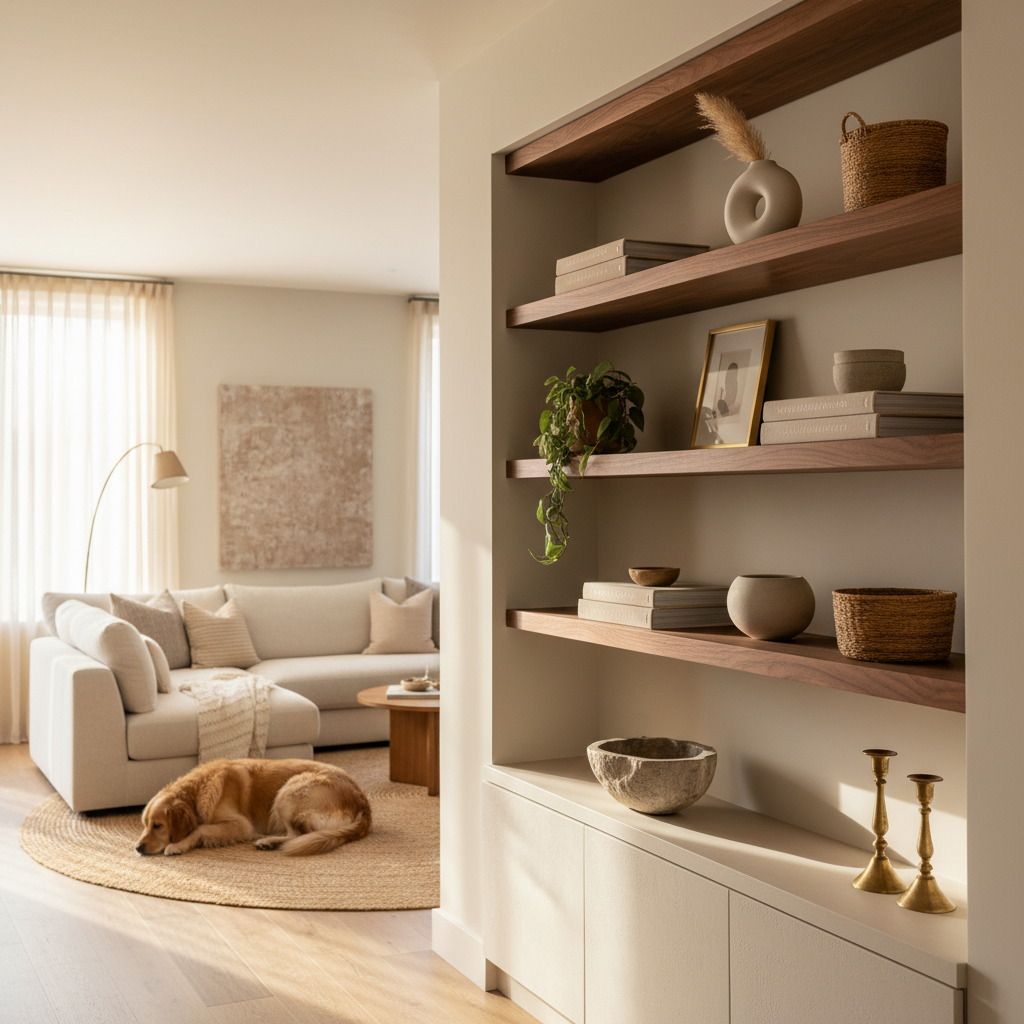
Living room open shelving is your opportunity to showcase personality and create cozy vignettes. This is where you can truly lean into the "layered narrative." ✅ Books: A must-have. Mix vertical stacks with horizontal piles. ✅ Art and photos: Lean framed art or personal photographs against the back of the shelf. Vary sizes for interest. ✅ Decorative objects: Sculptures, unique vases, global finds, or cherished collectibles. Remember the rule of three for groupings. ✅ Textural elements: Introduce woven baskets (for hidden storage), ceramic pieces, glass objects, and small textiles (like a folded throw or a small woven mat). ✅ Greenery: Small plants or faux botanicals add life and color. ✅ Personal touches: Items that tell your story – souvenirs, heirlooms, or items related to your hobbies. ✅ Varying scale: Ensure a mix of large, medium, and small items to maintain visual interest.
Bathroom Open Shelving: Spa-Like Serenity
In the bathroom, open shelving should evoke a sense of calm and luxury, while still being practical. Focus on soft textures and soothing colors. ✅ Rolled towels: Stack or roll plush, matching towels. White or neutral tones work best for a spa-like feel. ✅ Attractive storage: Use woven baskets or decorative boxes to hide less-attractive essentials like extra toilet paper or cleaning supplies. ✅ Scented candles/diffusers: Add ambiance and a pleasant aroma. ✅ Small plants: A succulent or air plant can thrive in bathroom humidity and adds a touch of nature. ✅ Glass jars: Decant cotton balls, Q-tips, or bath salts into elegant glass jars. ✅ Minimalist art: A small, serene piece of art or a simple framed print. ✅ High-quality soaps/lotions: Display beautiful bottles of hand soap or lotion.
Home Office Open Shelving: Organized Productivity
For a home office, open shelving needs to balance organization with inspiration. It’s about creating a stimulating yet tidy environment. ✅ Books: Essential for an office. Arrange them neatly, perhaps even color-coded for a design statement. ✅ File boxes/binders: Use attractive, matching file boxes or binders to keep documents organized and out of sight. ✅ Desk accessories: Display stylish pen holders, a small clock, or a unique paperweight. ✅ Inspirational art: Small framed quotes or artwork that motivates you. ✅ Plants: A desk plant can improve air quality and reduce stress. ✅ Technology (discreetly): If necessary, integrate small tech items like a charging dock, but ensure cables are managed and hidden. ✅ Personal achievements: Display awards, diplomas, or meaningful photographs.
Maintaining Your Styled Shelves: The Art of Evolution
Styling open shelves isn't a one-and-done task; it's an ongoing process. To keep your shelves looking fresh, curated, and clutter-free, regular maintenance and an understanding of how to evolve your display are essential. Without this continuous attention, even the most perfectly styled shelves can gradually succumb to dust, disarray, and the accumulation of new, uncurated items. Think of your shelves as a living canvas that needs periodic refreshing to stay vibrant and reflective of your current style.
Regular Dusting and Cleaning
This might seem obvious, but it's often overlooked. Open shelves, by their very nature, are dust magnets. Regular dusting is crucial to prevent a layer of grime from dulling your beautiful display. Make it a habit to dust your shelves and their contents at least once a week, or more frequently in high-traffic areas or dusty environments. For delicate items, use a soft brush or a microfiber cloth. For books, a quick wipe-down can prevent dust from settling into the pages. Periodically, remove all items from a shelf, wipe down the shelf itself with a damp cloth (and appropriate cleaner for the material), and then carefully replace your curated items. This not only keeps things clean but also gives you an opportunity to reassess the arrangement.
Seasonal Updates and Refreshing Your Look
One of the joys of open shelving is the ease with which you can refresh your decor to reflect seasons, holidays, or simply a change in your personal style. This prevents your shelves from feeling stagnant and keeps your home feeling current.
- Spring: Introduce lighter colors, fresh flowers, or small potted plants. Swap out heavier textures for lighter ones.
- Summer: Bring in vibrant colors, beach-inspired elements (shells, coral), or travel souvenirs.
- Fall: Incorporate warmer tones, natural elements like small pumpkins or gourds, cozy textures, and scented candles.
- Winter/Holidays: Add festive decor, metallic accents, or seasonal greenery. This doesn't mean a complete overhaul every few months. Often, just swapping out a few key items – a vase, a small piece of art, or a candle – can dramatically change the feel of your shelves. This cyclical refreshing keeps your display dynamic and engaging.
The One-In, One-Out Rule for New Acquisitions
To prevent your shelves from becoming cluttered again, adopt the "one-in, one-out" rule. Every time you acquire a new decorative item that you wish to display on your open shelves, commit to removing an existing item. This forces you to be intentional about what you bring into your home and ensures that your curated collection remains just that – curated. This rule helps maintain the balance and negative space you worked so hard to create. If you can't decide which item to remove, perhaps the new item isn't truly necessary for your display. This discipline is vital for long-term clutter prevention.
Reassessing and Editing Periodically
Even with regular dusting and seasonal updates, it's important to periodically step back and reassess your entire open shelf display with fresh eyes. Perhaps every 3-6 months, take a critical look at your shelves. ✅ Does it still reflect your style? Your tastes evolve, and your shelves should too. ✅ Is anything looking tired or dated? ✅ Are there any items that no longer bring you joy or serve a purpose? ✅ Has clutter started to creep back in? Don't be afraid to completely clear a shelf and restyle it from scratch if it feels necessary. This periodic, thorough edit is crucial for maintaining the integrity of your design and ensuring your open shelving continues to enhance your home, rather than becoming a source of visual stress. Remember, well-styled open shelving is a journey, not a destination.
Frequently Asked Questions
Q: How do I prevent dust from accumulating on my open shelves and items? A: Regular dusting is key. Use a microfiber cloth or a duster with an electrostatic charge at least once a week. For delicate items, a soft brush can be effective. Consider placing less frequently used items in attractive, closed containers or baskets on the shelves to protect them from dust.
Q: What's the ideal number of items to display on a single open shelf? A: There's no fixed number, as it depends on the size of the shelf and the items themselves. However, a good rule of thumb is to aim for 3-5 distinct groupings or individual items per shelf, ensuring plenty of negative space. Focus on creating vignettes rather than filling every available inch.
Q: Can I mix different styles of decor on my open shelves? A: Yes, absolutely! Mixing styles can add depth and personality. The trick is to find a unifying element, such as a consistent color palette, a shared material (e.g., all wood accents), or a common theme (e.g., travel-inspired items). This creates cohesion even with diverse pieces.
Q: How do I make open shelves look good if I don't have many decorative items? A: Start with what you have! Books are a great filler. Add practical items like beautiful dishes or attractive storage boxes. Incorporate natural elements like a small plant or a simple vase with branches. Focus on quality over quantity, and embrace negative space to make the few items you have stand out.
Q: Should all my open shelves be styled identically? A: No, in fact, they shouldn't! While a cohesive theme or color palette is good, each shelf should have its own unique arrangement and focal point. Varying the heights, groupings, and types of items from shelf to shelf creates visual interest and prevents a monotonous, "showroom" feel.
Q: What kind of lighting works best for open shelves? A: Integrated LED strip lighting installed underneath the shelves can highlight your display beautifully and add ambient light to the room. Small puck lights or even a strategically placed table lamp nearby can also draw attention to your curated items.
Q: How do I incorporate functional items like dishes or pantry staples without them looking messy? A: The key is curation and containment. Use matching sets of dishes, decant dry goods into attractive clear or ceramic containers, and group similar functional items together. Ensure these items are visually appealing and neatly arranged.
Q: My shelves are very shallow. How can I style them effectively? A: For shallow shelves, focus on single-layer items. Lean small framed art or photos against the back. Use small, narrow vases, slender books stacked horizontally, or small decorative plates. Plants with trailing vines can also add depth without taking up much surface area.
Conclusion
Mastering the art of styling open shelving without it looking cluttered is a journey of intentionality, creativity, and thoughtful curation. It's about transforming functional storage into a dynamic display that tells your home's unique story, adding depth, personality, and a sense of calm to your living spaces. By understanding the foundational principles, embracing the "Layered Narrative" approach, and committing to ongoing maintenance, homeowners can create shelves that are not only beautiful but also truly reflective of their personal style. Remember to prioritize negative space, vary heights and textures, and always choose items that resonate with you. Your open shelves are a canvas; let them evolve with your life and bring joy to your everyday.
Ready to discover your unique home design style? Take the free HomeVibed Style Quiz and get a personalized room-by-room design plan instantly.
As an Amazon Associate, HomeVibed earns from qualifying purchases. This helps support our free content at no extra cost to you.
🏠 Recommended Products for This Style

rugs
Better Homes & Gardens Woven Area Rug
Adds warmth and texture underfoot — the fastest way to anchor a living room.

lighting
Brightech Sparq Arc Floor Lamp
Warm ambient lighting that transforms the mood of any living space instantly.

furniture
Rivet Revolve Modern Upholstered Sofa
Mid-century silhouette with deep cushions — the centerpiece your living room deserves.
Discover Your Home Vibe
Take our free 10-question quiz to get your personalized style report, color palette, and room-by-room design plan.
Take the Quiz